You hate opening the oven to find one side burned and the middle undercooked. If you want to learn how to cook dinner evenly without burning, this guide gives clear, practical steps you can use tonight. You’ll stop guessing and start seeing consistent, evenly cooked results across proteins and veg.
The secret is control: the right heat, spacing, and a couple of simple tools. A digital kitchen scale helps you portion evenly, and a 10-inch cast iron skillet holds steady heat for searing then finishing in the oven. Read on to learn the techniques, troubleshooting cues, and quick product picks to stop burning and start enjoying even dinners.
Preparing Your Ingredients
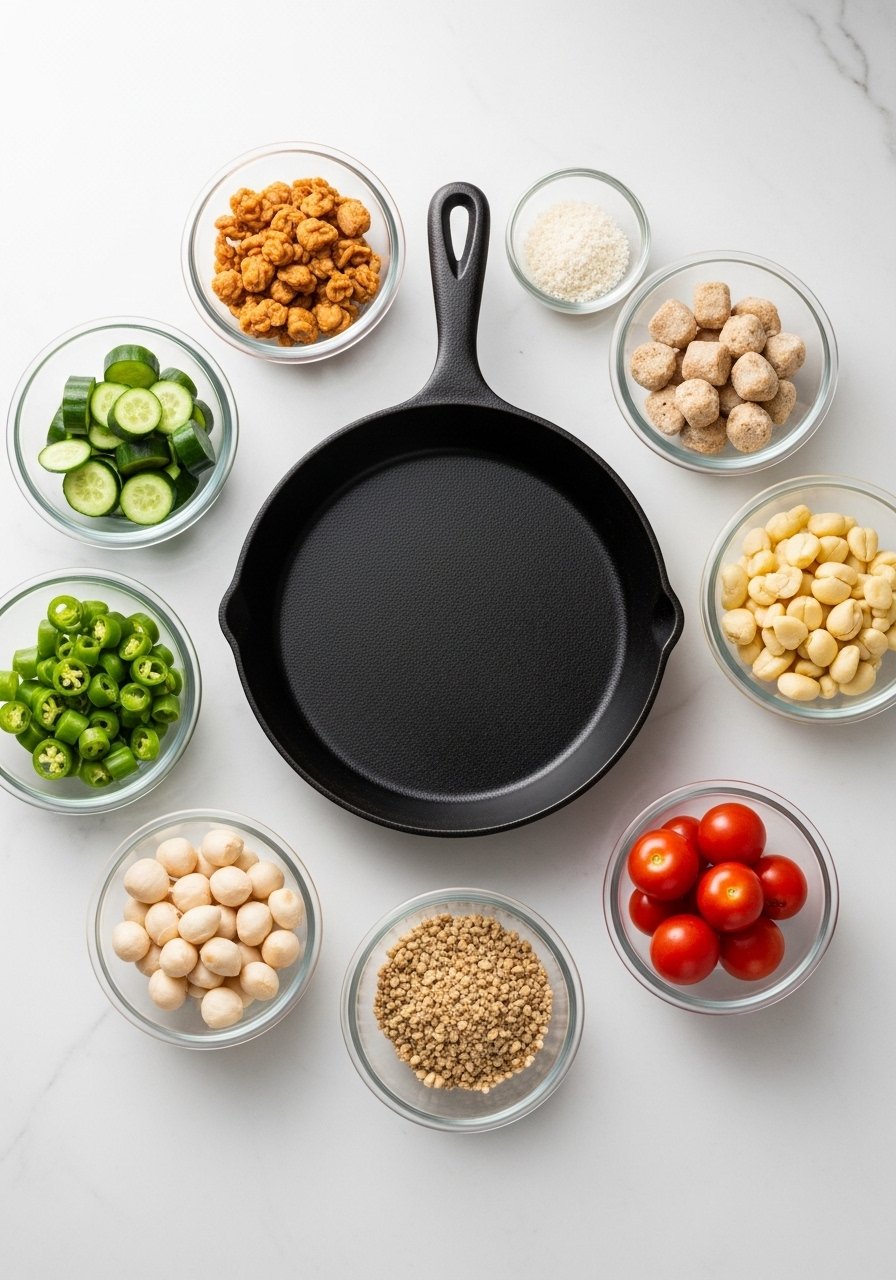
- Portioning matters. Use your digital kitchen scale to weigh similar-sized pieces so everything cooks at the same rate.
- Pat proteins and vegetables dry with a paper towel to prevent steam zones that cause uneven browning.
- Toss vegetables in a tablespoon of high-smoke-point oil (try avocado oil) and a pinch of salt so surfaces sear into crispy golden edges.
- If you can, cut food into uniform sizes — 1-inch cubes or ¼-inch slices are easy visual standards and scale up or down.
Common pain point solved: overcrowding the pan. Leave space — crowded pans steam instead of brown.
Getting Your Heat Right
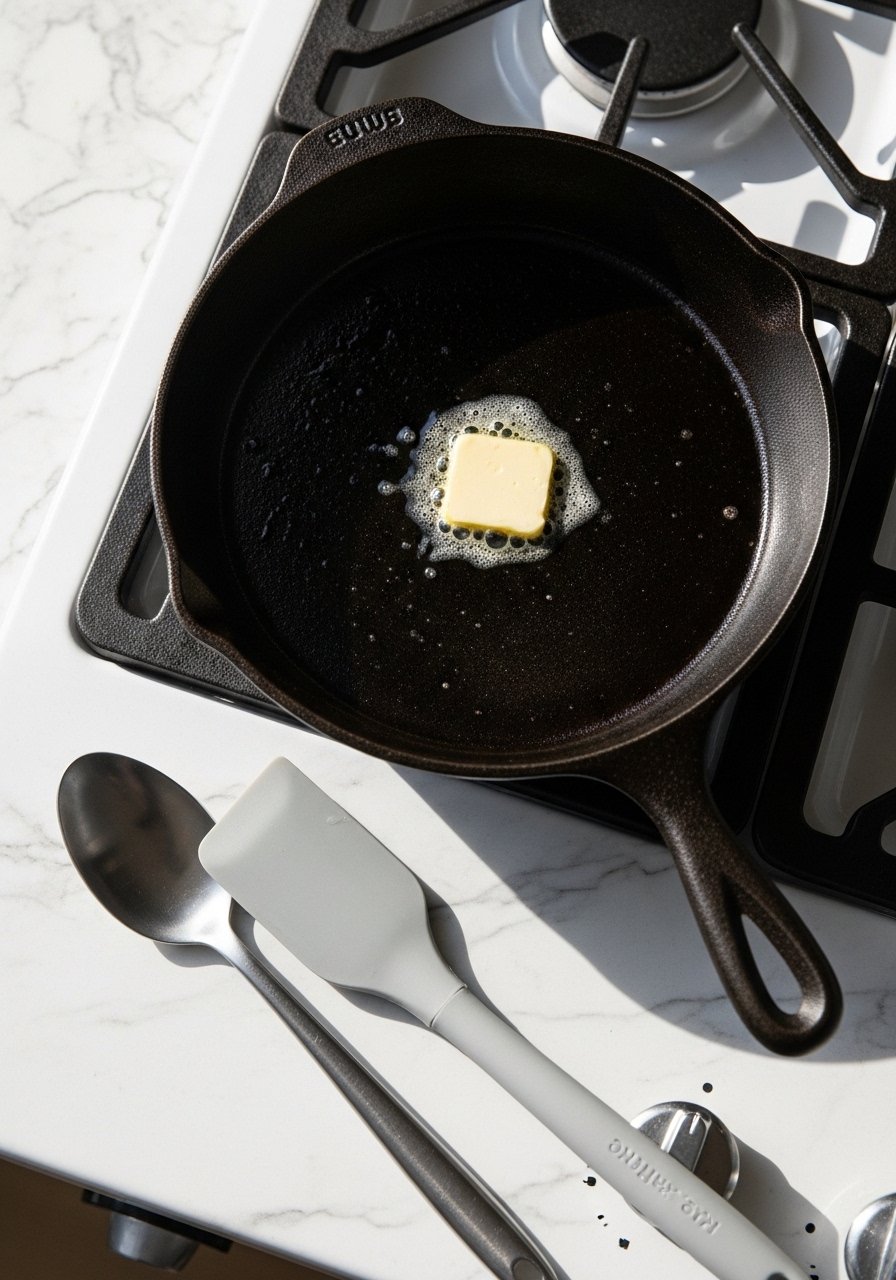
- Preheat in steps. Heat your pan over medium-high for 3–5 minutes until just smoking slightly for cast iron, then lower to medium before adding food.
- Use an instant-read thermometer for proteins: chicken to 165°F, pork to 145°F (rest 3 minutes), steaks 125–135°F for medium-rare to medium.
- To avoid burned exteriors with undercooked centers, sear quickly on high heat, then finish in a 375°F oven for 5–10 minutes. A cast iron skillet moves right from stovetop to oven.
- If you notice uneven hot spots, rotate the pan or move pieces to cooler edges. A splatter screen also reduces flare-ups; try a splatter screen when cooking at higher temps.
Unique tip many cooks miss: use the oven as a leveling tool — it evens internal temperature without continuing to char the outside.
Cooking Evenly on the Stovetop
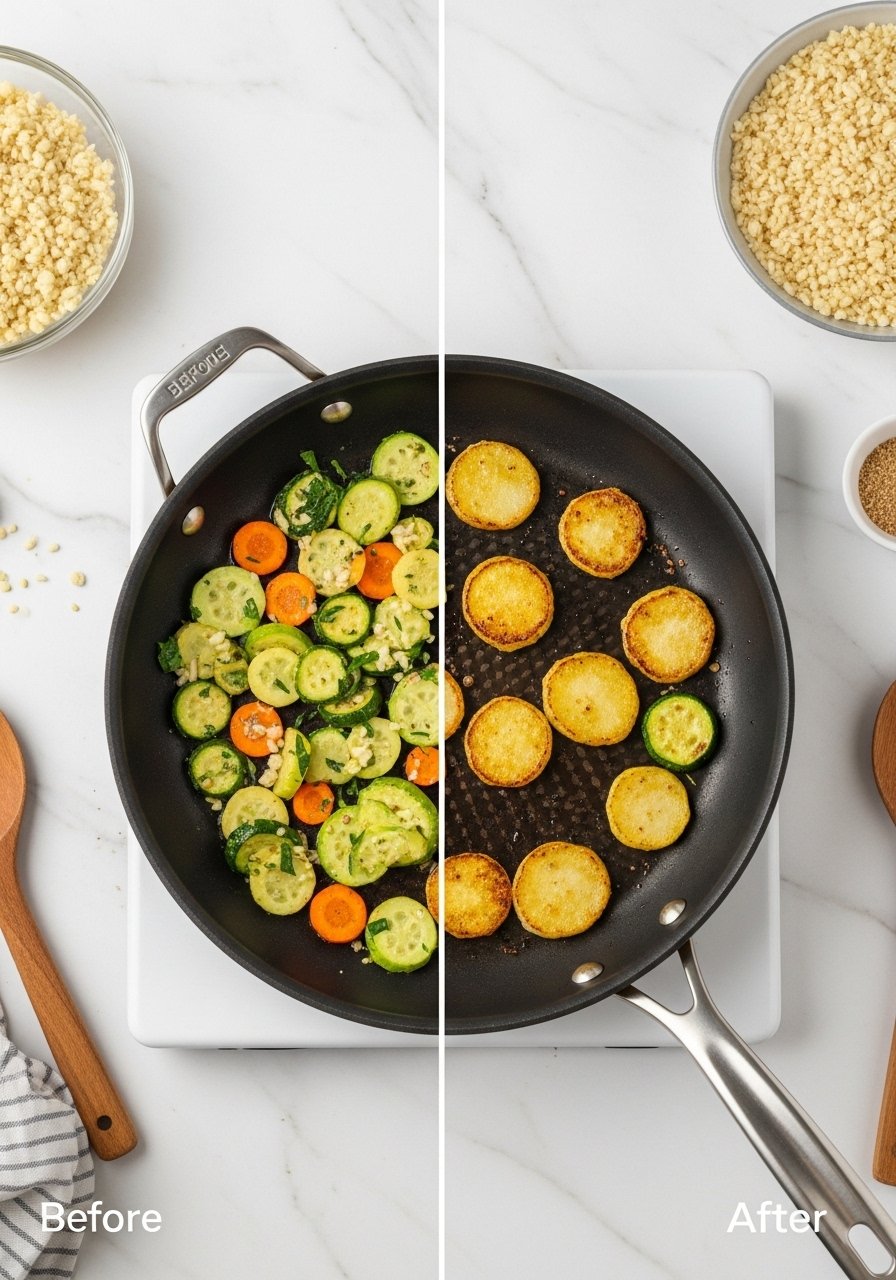
- Heat oil, add items that take longest first, and move faster-cooking items later.
- Sear in a single layer — no overlap — and flip only once for best golden crust.
- Use the right utensil to move food gently: a silicone spatula or tongs prevents tearing and helps you judge doneness visually.
Quick pro checklist:
- Don’t add cold meat straight from fridge — bring to room temp 10–15 minutes.
- For mixed pans, give dense veg like potato longer pre-roast time.
- Season halfway through for better crust development.
Troubleshooting common issues: If edges burn but center is raw, lower the heat and finish in oven or add a splash of liquid (stock or rice vinegar) and cover briefly to redistribute heat.
Finishing, Resting, and Serving
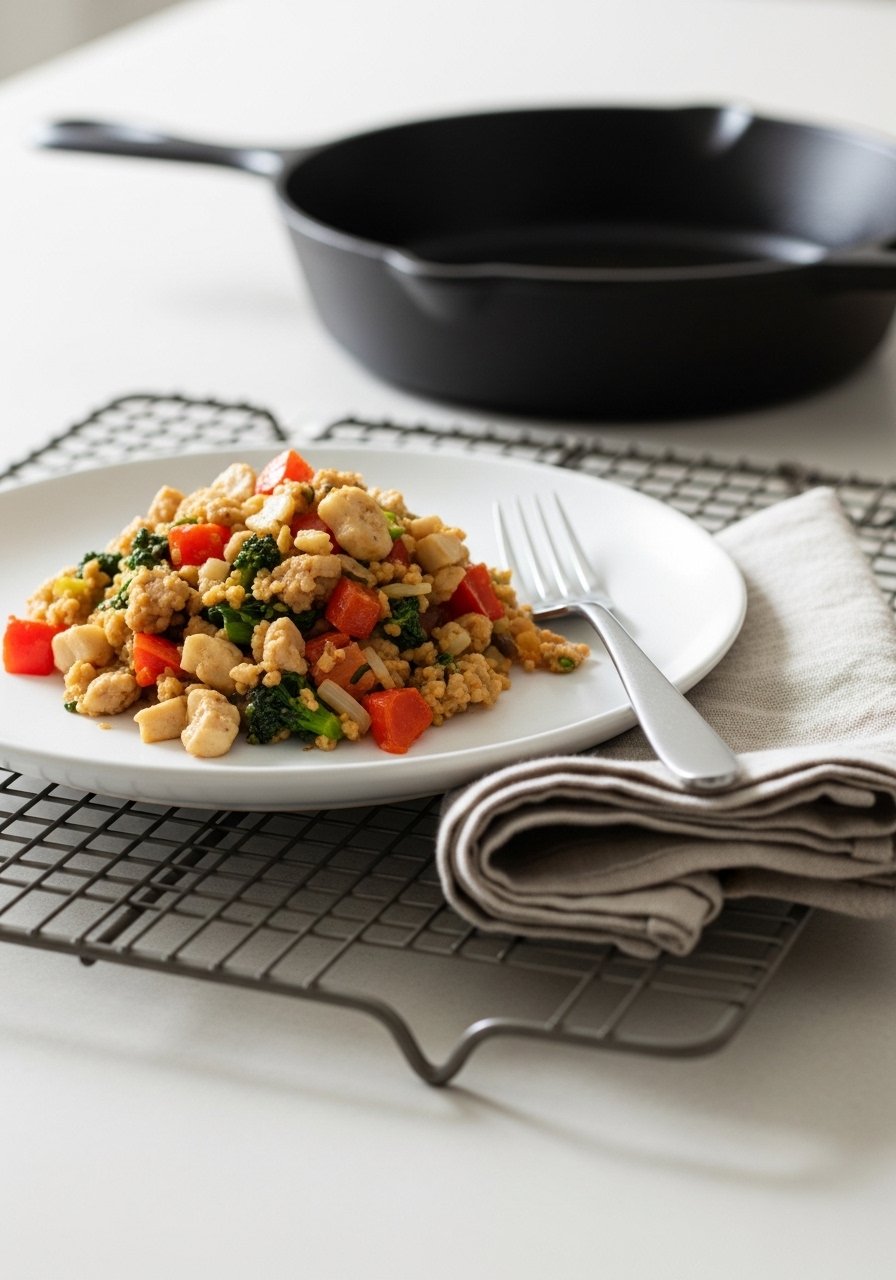
- Rest proteins on a wire cooling rack for 5–10 minutes to let juices redistribute — this avoids burned-seeming dry edges with undercooked centers.
- Finish vegetables with a dash of flavor: a sprinkle of smoked paprika or a drizzle of ghee for richness without burning.
- Leftovers? Store cooled portions in glass meal prep bowls and reheat gently on low in a skillet with a splash of water to rehydrate.
Scaling and make-ahead tip: If feeding more than four, cook in batches and keep finished pieces warm in a 200°F oven on a baking sheet.
Troubleshooting and Small Tweaks
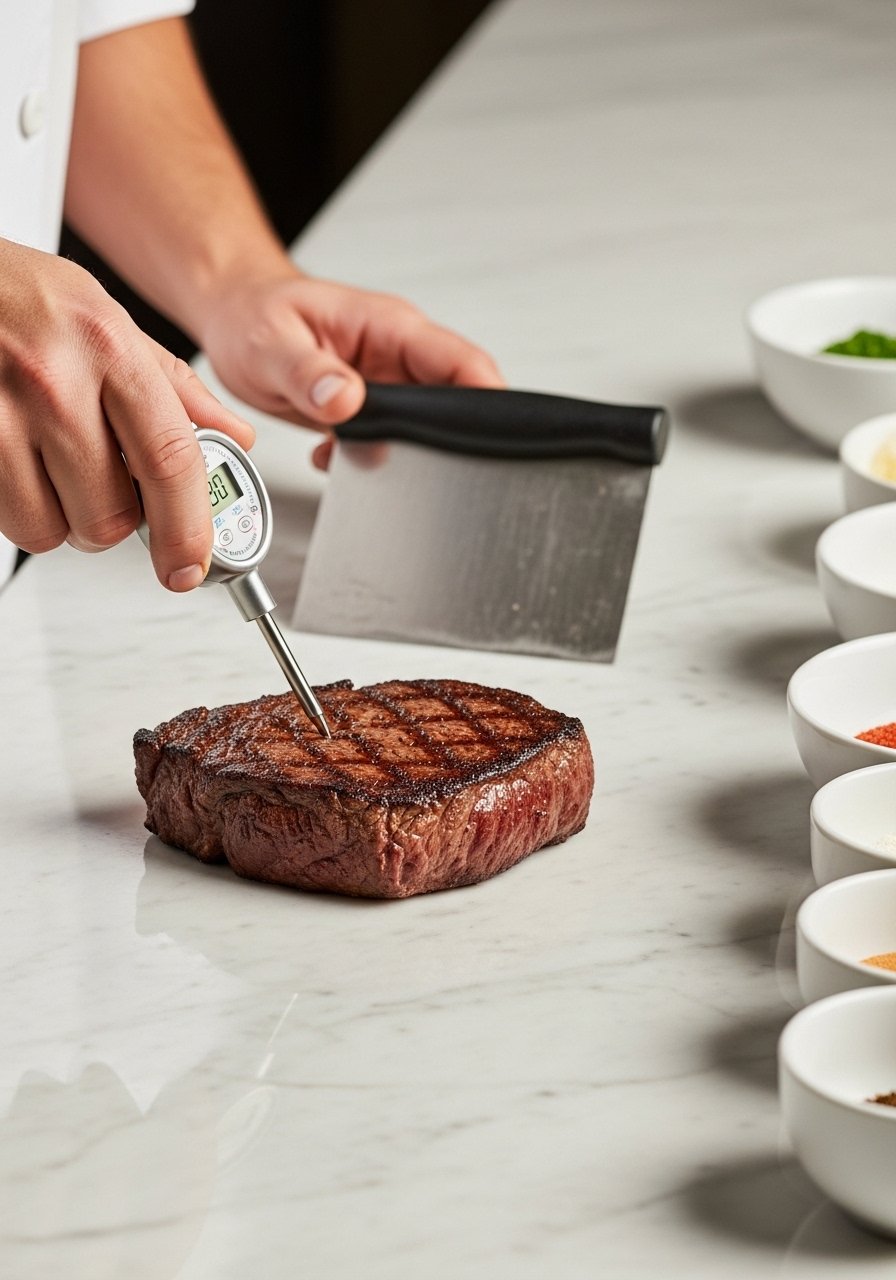
- Burned bottoms? Reduce stovetop heat and use a bench scraper to lift and check doneness.
- Uneven color across the pan? Use a heat diffuser or switch to a heavy-bottom pan like a 10-inch cast iron skillet to stabilize temperature.
- Short on time? Par-cook dense veg in the microwave (2–3 minutes) to speed stove time without burning.
You’ve now got the steps to cook dinner evenly without burning: portion, preheat, space, monitor, and finish smart. Pin this for your next weeknight — small changes, like measuring portions or using an instant-read thermometer, will make even dinners the new normal.
Once you try these tips, share which one saved your dinner tonight. Pin this guide and grab one tool to start — you'll see the difference fast.