Somehow, dinner can feel expensive and exhausting at the same time. You want something that tastes good, feels filling, and doesn’t scream “I’m eating whatever was left in the pantry.” The best part? Budget dinners don’t have to be boring. With a few smart choices, you can cook meals that feel cozy, fresh, and totally “real dinner”… while still keeping your grocery bill under control.
The secret is learning how to stretch ingredients without sacrificing flavor. Think: simple staples, smart swaps, and a few “tiny upgrades” that make everything taste like you tried (even when you didn’t).
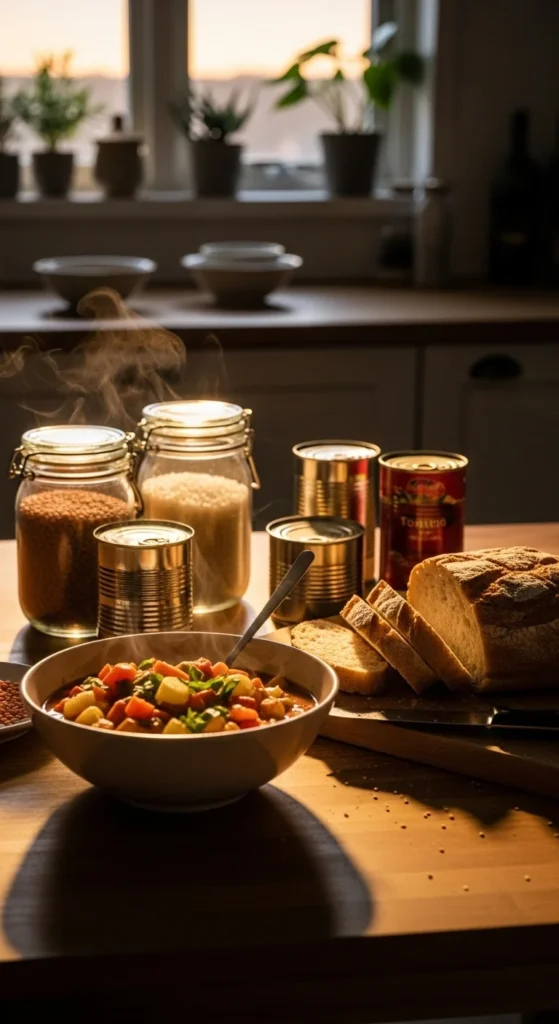
Start With Budget Staples That Feel Like Real Food
Budget cooking gets easier when your kitchen has a few reliable basics. These are cheap, flexible, and can turn into a hundred different meals.
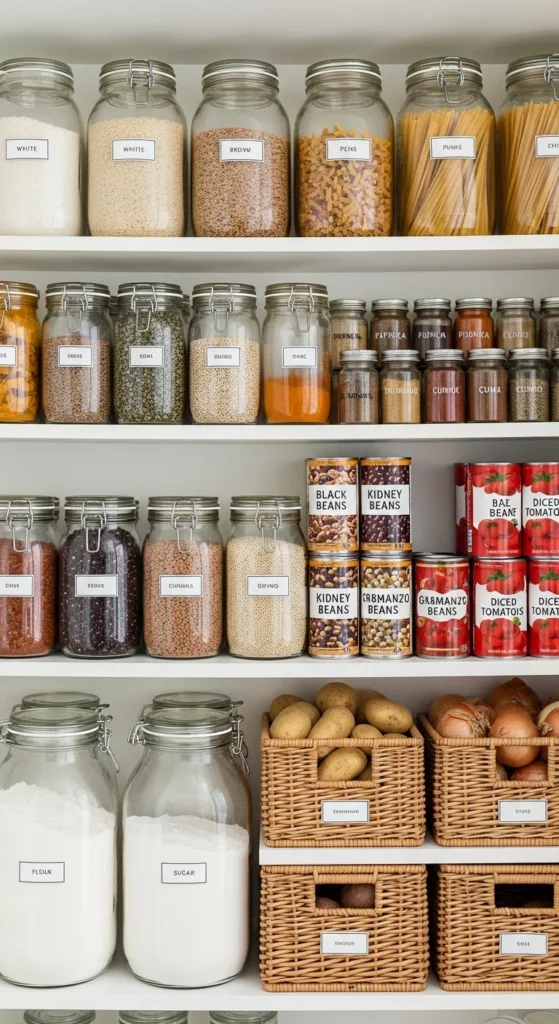
Pantry staples worth keeping
- Rice, pasta, couscous, oats
- Canned tomatoes
- Canned beans (chickpeas, black beans, kidney beans)
- Lentils (cook fast and feel hearty)
- Broth cubes or powder
- Basic spices (garlic powder, paprika, cumin, Italian-style blend)
Fridge/freezer staples
- Eggs
- Frozen vegetables (peas, corn, mixed veg, spinach)
- Onions and garlic (big flavor for little cost)
- Carrots, cabbage, potatoes (cheap and filling)
- A block of cheese (optional, but a little goes far)
When you have these, you’re never “out of food.” You’re just out of ideas—until you use the formulas below.
Use the “One Protein, Three Meals” Strategy
Buying a different protein for every dinner is where budgets get wrecked. Instead, pick one affordable protein and stretch it across the week.
Great budget-friendly proteins:
- Eggs
- Beans and lentils
- Chicken thighs (often cheaper than breast)
- Frozen shrimp (used in small amounts)
- Ground turkey (if it’s priced well)
How to stretch it without feeling repetitive
- Meal 1: stir-fry or skillet bowl
- Meal 2: wrap or quesadilla night
- Meal 3: soup or pasta with the leftovers
Example: Cook chicken once, then use it in:
- Rice bowls with veggies + sauce
- Wraps with salad + yogurt sauce
- Soup with beans + canned tomatoes
This saves money and time.
Build Budget Dinners Around “Flavor + Texture”
If budget food feels “cheap,” it’s usually missing one of these:
- Flavor (salt, acid, spices)
- Texture (crunch, crisp edges, creamy sauce)
Here are easy ways to add both without spending much:
Cheap flavor boosters
- Garlic + onion (the foundation of everything)
- Lemon or vinegar (a splash makes food taste brighter)
- Soy sauce (adds depth instantly)
- A spoon of mustard
- Chili flakes or black pepper
Texture upgrades that cost almost nothing
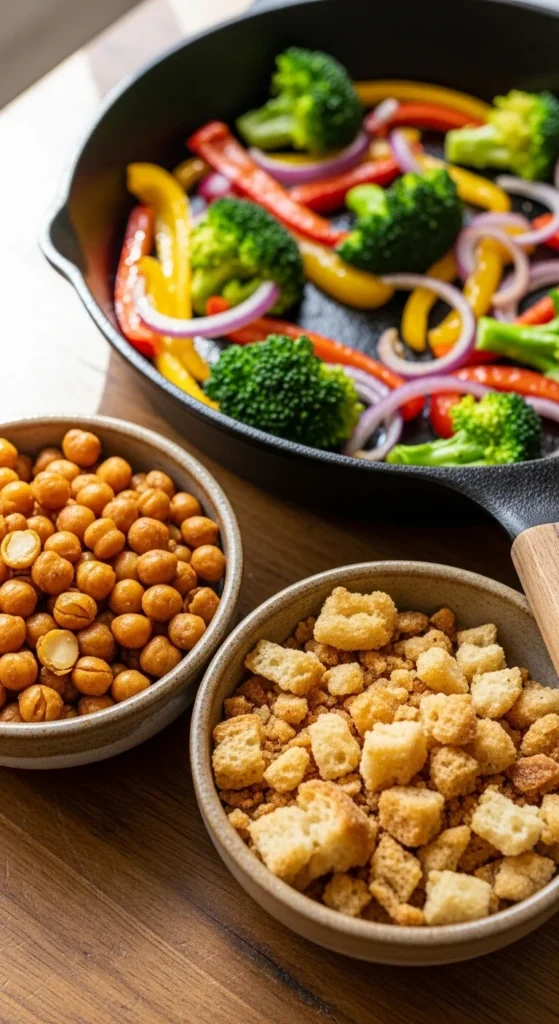
- Toasted breadcrumbs (made from stale bread)
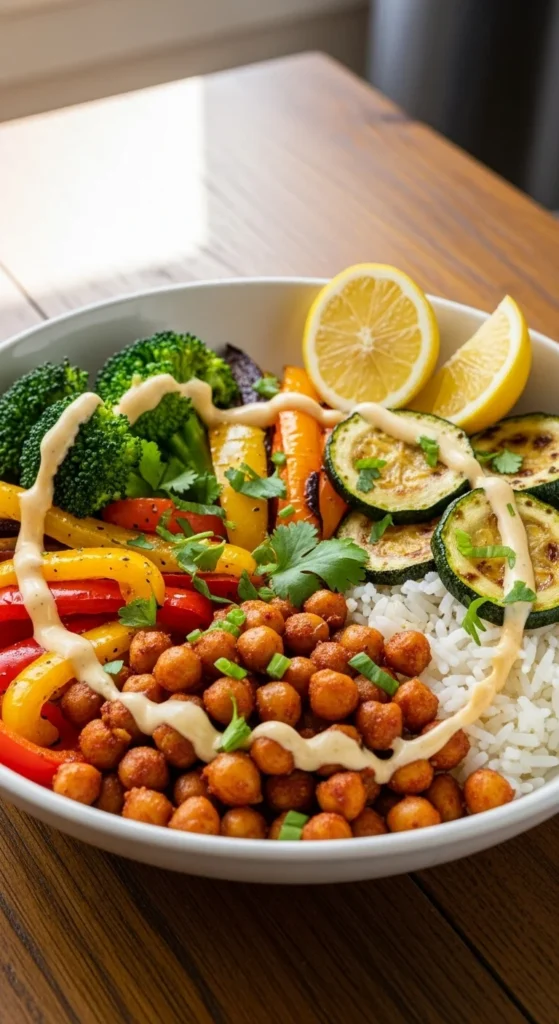
- Roasted chickpeas (crispy and snackable on top)
- Pan-seared veggies (don’t steam them—let them brown)
- A small handful of seeds or nuts (optional)
Cook “Big Batch” Bases That Make Dinner Faster and Cheaper
Cooking a base ingredient once can create multiple dinners without feeling like leftovers.
Best budget bases:
- Rice
- Pasta
- Potatoes
- Lentils
- Beans
Make one base, then remix it:
- Rice becomes fried rice, rice bowls, soup filler
- Lentils become tacos, stew, pasta sauce
- Potatoes become sheet-pan dinner, mash, breakfast-style dinner
This is how you keep dinner easy without buying new ingredients every night.
Try These Budget Dinner Formulas (They Always Work)
You don’t need fancy recipes. You need repeatable combos.
1) Bean + veggie + sauce bowls
- Canned beans + sautéed vegetables + quick sauce over rice
Quick sauce idea: soy sauce + a little sugar + vinegar + garlic
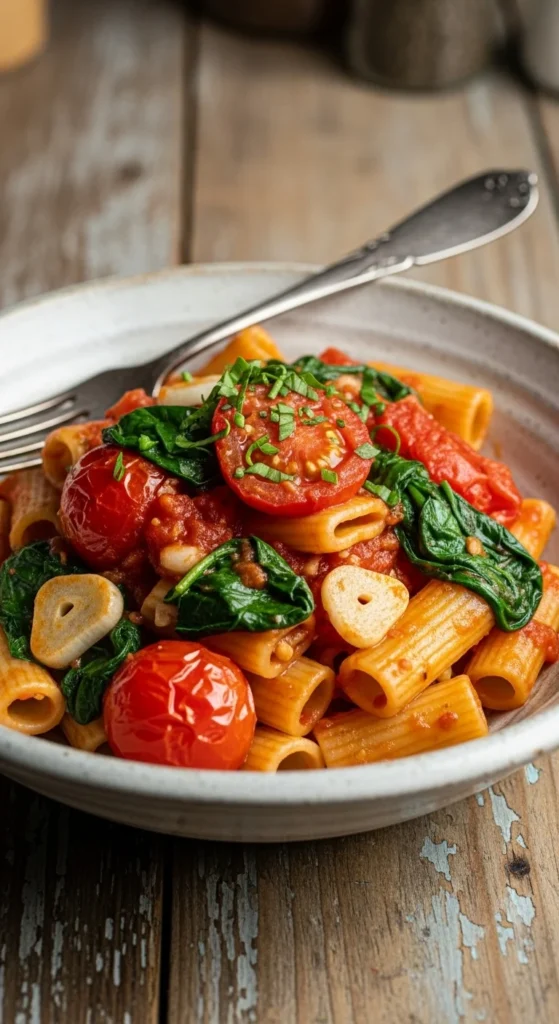
2) Pantry pasta that tastes “real”
- Pasta + canned tomatoes + garlic + herbs + spinach
Add protein: beans or a fried egg on top
3) Sheet-pan “clean out the fridge” dinner
- Chop whatever veggies you have + toss with oil + spices + roast
Add: chicken pieces or chickpeas for protein
4) Egg dinner (underrated and so budget-friendly)
- Scramble eggs with onions + spinach + tomatoes
Serve with toast or tortillas
Shop Smarter Without Feeling Restricted
Budget cooking doesn’t mean never buying fun food. It means buying smarter versions of what you already like.
Try these shopping habits:
- Buy frozen vegetables (often cheaper, less waste)
- Choose in-season produce (better price + flavor)
- Look for store-brand staples (beans, rice, pasta, canned tomatoes)
- Plan meals that share ingredients (one onion used in three dinners)
- Cook 2–3 dinners that overlap instead of 7 totally different ones
And don’t underestimate leftovers. Leftovers aren’t “boring”—they’re future dinner you don’t have to pay for twice.
Make It Feel Special With Tiny Upgrades
This is the part that keeps budget dinners from feeling “cheap.”
Pick one or two:
- Add fresh herbs if available (even a little helps)
- Finish with lemon juice or vinegar
- Add a creamy yogurt sauce
- Make a quick side salad (greens + vinegar + oil + salt)
- Serve in a bowl with toppings (it feels instantly more “restaurant”)
Takeaway
Budget dinners don’t have to feel boring or “less than.” When you stock smart staples, reuse ingredients across meals, and focus on flavor + texture, you can cook dinners that feel satisfying, fresh, and genuinely enjoyable—without spending a lot.
Save this post for later and try one budget dinner formula this week. Your wallet (and your weeknights) will thank you. 🍲✨